


Encouraging Toddler Social Inclusion
- koenikachakrabarty
- Jun 13
- 4 min read
Inclusion is more than a modern educational principle, it is a fundamental value that helps children learn how to respect, understand, and connect with others. While conversations about inclusion often focus on older children and adults, the foundation for inclusive thinking begins much earlier. The toddler years, typically between the ages of one and three, are a critical period for social, emotional, and cognitive development. During this stage, children are forming their first friendships, learning to communicate, and developing an understanding of the world around them.
Encouraging inclusion among toddlers means creating environments where every child feels welcomed, valued, and supported, regardless of their abilities, cultural background, language, gender, family structure, or developmental differences. By nurturing inclusive attitudes from an early age, parents, caregivers, and educators can help raise a generation that values diversity and embraces differences with empathy and kindness.
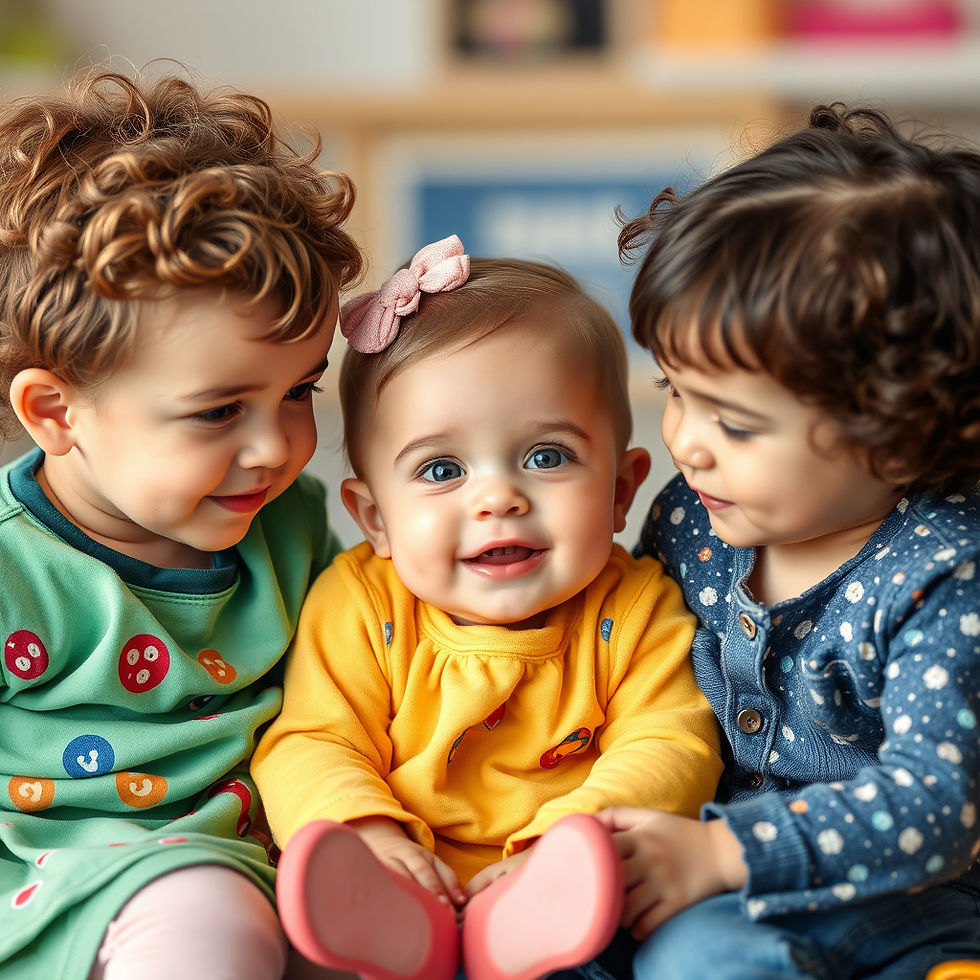
Why Inclusion Matters in Early Childhood
Toddlers are naturally curious. They notice differences in appearance, language, behaviour, and ability, even if they do not yet fully understand them. Without guidance, children may develop misconceptions based on limited experiences. Inclusive environments help toddlers learn that differences are a natural and valuable part of life.
Research in early childhood development suggests that positive interactions with diverse peers can help children:
Develop empathy and compassion.
Build stronger communication skills.
Learn cooperation and teamwork.
Improve emotional intelligence.
Become more adaptable and open-minded.
Develop a stronger sense of fairness and respect.
Most importantly, inclusion benefits all children; not just those who may be considered different. Every child gains valuable social and emotional skills when they learn alongside peers from a variety of backgrounds and experiences.
The Role of Play in Promoting Inclusion
Play is often called the "language of childhood," and for good reason. Through play, toddlers learn how to share, cooperate, solve problems, and build relationships. Inclusive play environments ensure that every child has the opportunity to participate and contribute.
For example, caregivers and educators can:
Offer toys and activities that can be used in multiple ways.
Encourage cooperative games rather than competitive ones.
Adapt activities so children of varying abilities can participate.
Pair children together during group tasks and play sessions.
Model positive social interactions and sharing behaviours.
When children engage in inclusive play, they begin to see one another as friends and playmates rather than focusing solely on differences. These experiences help foster a sense of belonging and mutual respect.

Representation Matters
The materials children encounter every day play an important role in shaping their understanding of the world. Books, toys, posters, and media should reflect a wide range of cultures, family structures, languages, and abilities.
A toddler who sees themselves represented in their environment feels recognized and valued. At the same time, exposure to diverse representations helps children understand and appreciate experiences different from their own.
Examples of inclusive resources include:
Storybooks featuring children from various cultural backgrounds.
Toys that represent different ethnicities and abilities.
Images depicting diverse families and communities.
Songs, stories, and celebrations from different cultures.
These resources send a powerful message: everyone belongs.

Modelling Inclusive Behaviour
Toddlers learn primarily through observation. They watch how adults interact with others and often imitate those behaviours. As a result, parents, caregivers, and educators have a significant influence on how children perceive and treat others.
Adults can model inclusion by:
Using respectful and positive language.
Encouraging kindness and cooperation.
Addressing exclusionary behaviour gently but firmly.
Demonstrating curiosity rather than judgment about differences.
Celebrating diversity through everyday conversations and activities.
Simple actions can have a lasting impact. For instance, if a child notices that another child communicates differently, an adult can explain that people express themselves in different ways and that everyone deserves patience and understanding.
Creating Inclusive Learning Environments
Whether at home, in childcare settings, or in preschool classrooms, the environment should support participation from all children. An inclusive environment recognizes that every child learns and develops at their own pace.
Some ways to create inclusive spaces include:
Physical Inclusion
Providing accessible play areas.
Offering a variety of seating and activity options.
Ensuring materials can be reached and used by all children.
Social Inclusion
Encouraging group activities.
Supporting peer interactions.
Helping children resolve conflicts respectfully.
Emotional Inclusion
Recognizing and validating children's feelings.
Encouraging self-expression.
Creating a safe space where children feel accepted and understood.
When children feel secure and valued, they are more likely to engage confidently with others and develop positive social relationships.

Overcoming Common Challenges
Encouraging inclusion among toddlers is not always straightforward. Young children are still learning social norms and may occasionally exclude others unintentionally. They may prefer familiar playmates or struggle to understand behaviours that seem different from their own.
These moments should be viewed as opportunities for learning rather than punishment. Adults can gently guide children by asking questions such as:
"How do you think your friend feels?"
"What can we do to help everyone join in?"
"How can we make this game fun for everyone?"
By helping toddlers reflect on their actions, adults can encourage empathy and problem-solving skills that will benefit them throughout life.
The Long-Term Benefits of Inclusion
The lessons learned during the toddler years often influence attitudes and behaviours well into adulthood. Children who grow up in inclusive environments are more likely to:
Form positive relationships with diverse groups of people.
Demonstrate empathy and understanding.
Challenge stereotypes and prejudice.
Become confident communicators and collaborators.
Contribute positively to their communities.
Inclusion also strengthens communities by fostering acceptance, reducing social barriers, and promoting a culture of respect.

Encouraging toddler inclusion is not about teaching complex concepts of diversity and equality. Rather, it is about creating everyday experiences that help children understand that everyone deserves kindness, respect, and a sense of belonging. Through inclusive play, diverse representation, supportive environments, and positive role modelling, adults can help toddlers develop the empathy and understanding needed to thrive in an increasingly interconnected world.
The values we nurture during early childhood have the power to shape future generations. By making inclusion a priority from the very beginning, we are not only supporting individual children, we are helping to build a more compassionate, accepting, and equitable society for all.
Every toddler deserves the opportunity to be seen, heard, valued, and included. When we create spaces where every child belongs, we create a stronger future for everyone.
Disclaimer: This content is for educational purposes only and should not replace professional advice.
Shop authentic baby products online at Nexbie Store – trusted quality for your little one.
Visit www.nexbie.in today


Comments